

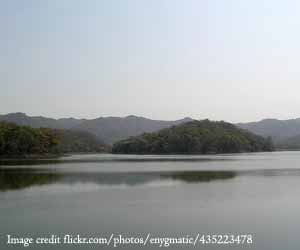
 The island city of Mumbai has a natural side as well along with it s metro reputation. There is thick green vegetation and rich flora and fauna are found in the city. The city is wealthy in natural setups like beaches, enthralling sea, islands, mountains, hills, rivers and lakes. If we talk about lakes then the city has three major lakes known as Powai Lake, Vihar Lake and Tulsi Lake. Tulsi Lake is said to be the second largest lake of Mumbai city. this fresh water lake is situated on the Salsette Island where other two lakes are also located. This lake is located in the densely forested area of Sanjay Gandhi National Park which is also known as Borivali National Park (BNP) in the north Mumbai. Due to the fresh potable water this lake provides drinking water to some parts of Mumbai city.The lake is not natural but it was planned back in the nineteenth century in the year 1872 AD but it took almost 26 years to materialize the plan and shape up the lake. The Lake became ready in the year 1897 AD. It was created by building a dam on the River Tasso and redirecting the flow of water of the river into the Vihar Lake. Tulsi Lake also gets water from the catchment area of 676 hectares of Powai Lake as well as Kanheri Hills during Monsoon period.The average rainfall here is 2500 mm yearly. The lake has a surface area of approximately 135 hectares. The surface elevation is 139.17 metres. The average water depth in the lake is 12 metres. The full capacity of the lake is 2294 million imperial gallons and the daily supply of water to Greater Mumbai is 4 million imperial Gallons. Most of the potable water requirement of southern Mumbai is completed by Tulsi Lake.During monsoon season if the lakes flood then the water from all three lakes outfall into the Mithi River.The surrounding area of lake is absolutely magnificent as there are lush greenery on both the sides with the back drop of hill slopes which are covered with mixed moist deciduous vegetation. The lake provides an opportunity to indulge in nature’s serene atmosphere while being in the city. If you talk about the fauna of the area then let me warn you that this lake houses sustainable numbers of Marsh Crocodiles (Muggers). The lake and its catchment area is protected by Brihanmumbai Municipal Corporation and Borivali National Park Authorities jointly. There is also a dedicated section in the park to see the reptiles of various sizes. This is known as Crocodile Park.AccessibilityThe nearest railway station is Borivali East situated on the Western Railways. The distance from the station to the lake is 6 kilometres and you can cover it by road using taxi, buses or auto rickshaws. CST station is 38 kilometres from the lake. The western express highway is also situated close by. At a distance of 20 kilometres is located the Sahar International Airport.Entry restrictionsThe lake is not open for general public all the time. To visit the lake you need to get prior permission from Sanjay Gandhi National Park Authorities as the lake is housed inside this park. The reason behind the restriction is due to the sizable population of Reptiles and migratory birds in the area. It has become one of the most popular tourists’ attractions in Mumbai and thus it is easy to get the permission.Timings to visit the lakeThe place is open to be explored throughout the year as the weather is pleasant here always but visitors and tourist are not allowed in the late evenings due to the safety reasons and the presence of reptiles in the area. The best time to visit the lake are monsoon and after monsoon months.RUCHI MAHAJANзайм на карту без отказов круглосуточновзять кредит онлайн