

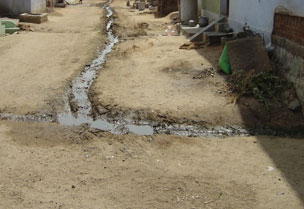
 Have you ever given a thought to what happens to the waste and the waste water we produce everyday from our day today activities? It goes into our sewage system if we or our locality has one. Yes it is true in a country like India it is not an easy task to manage such an important process of controlling sewage or treating it properly. India is a country densely populated and the recycling or treatment plants for waste water are very few thus making the situation even worse. Lack of education, lack of funds, lack of system, high negligence and lack of enthusiasm to improve the conditions of such an important process are some factors contributing towards contamination in ground water, natural water resources and spread of epidemics.Take an example like suppose for a day or two if we do not clean ourselves that is our internal system how would we feel? Imagine it. You must feel sick. We need to clean our system regularly in order to be healthy and fresh. If we cannot tolerate to be sick due to lack of cleaning of our body how can we tolerate that the waste water produced by us should not be treated effectively? We cannot blame the government or corporation for this negligence. It is not a one man or one organization responsibility. It is responsibility of each and every single individual who is contributing in production of waste and waste water. It is not impossible to treat the sewage water efficiently. There are more improved machines and mechanism available today that can finely treat this waste water that can be called safe to flow into any water resource.We often see a sight where the sewage water is overflowing from a drainage or sewage point and spreading on the roads or in neighborhoods. How disgusting it looks? It is more dangerous than it looks as it can contaminate your ground water as well as it can sip in from cracks of drinking water pipelines that go through under the ground. The poor people who live near such areas are affected the worse as they do not have either any water filtration system or money to fight with fatal diseases that are caused by contaminated water. They have no option left except compromising with whatever comes in their way. The contaminated fertilizers are also a health hazard and can invite fatal diseases. Sometimes or I should say most of the times the waste water is being mixed in the nearby rivers without treating in big cities. It pollutes the river water, endangers the water lives like fishes and other animals, creates unhealthy environment for surrounding areas.Steps we should take to prevent contamination:1. At individual level it is our social responsibility to keep our surroundings clean. If there is any leakage in the area then complain immediately to the related department.2. Do not through kitchen waste into water pipelines. Put a filter in the basins to prevent wastes from going into water pipelines.3. Any grease material should not be thrown into drainage system.4. It is always better to treat the waste at source. Installation of waste water treatment plant in housing societies is a good option and thus the recycled water can be used for watering the gardens or cleaning the parking lots, etc.5. Regular checking of the sewage pipelines for any clogs or blockage is a prevention step to control the problem.6. Before the monsoon it is important to thoroughly check all the drainage and sewage system for obstructions as when too much water flows in there are chances of overflow.7. It is City Corporation that can make efforts in improving the conditions of sewage water treatment plants at different locations in order to minimize water pollution.8. Regular check at private and public sewage system is significant in order to avoid any leakages underground and contamination.9. Old treatment plants should be repaired and machineries should be replaced when required in order to function properly.10. New waste water treatment plants should be built as soon as possible as the requirement is too much but the supply is almost negligible.11. The current statistics says that there are approximately 300 or more treatment plants in the country and most of them are either non functional or not in a state to utilize properly. For government also it is not a point to save money here. It is an area to spend more and more in order to minimize health problems among citizens and the other living creatures that are directly or indirectly affected by contamination of water, soil or plants.12. In big cities like Pune, Mumbai, Bangalore proper waste water treatment plants should be built in sufficient number as water pollution through the mixing of untreated water into main streams is becoming major cause of concern for water body pollution.In order to keep our environment safe for all living creatures we must join hands to do our bit at society level to prevent pollution due to sewage water.Ruchi Mahajanзайм на карту без отказов круглосуточновзять кредит онлайн