

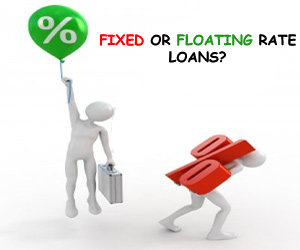
 Unless you have heaps of money, you will have to take a home loan if you are hoping to buy a house in the present property market situation. A home loan is honestly a headache. But the desire to own a house is so great that most people are willing to go through any amount of headache for it. One of the questions that one might face while opting for a home loan is whether to take a fixed interest rate loan or a floating interest rate loan.A fixed rate loan is when the rate of interest on the loan remains fixed throughout the time of the loan repayment. A floating rate loan is when the interest rate keeps changing with fluctuation of interest rates in the market. The interest rates depend on a lot of factors like liquidity (money in the market), monetary policies of the government, inflation etc. Floating rate loans are affected by these factors and the monthly installments can show sharp fluctuations in keeping with the market. On the other hand fixed rate loan remains fixed throughout the tenure of the loan though it can be revised and hiked as per the bank’s policies. This means even when the market is high on liquidity the rate of interest will be slightly higher.To make the choice between whether to go for a fixed rate loan or a floating rate loan is tough call. A simple statement of the advantages and disadvantages of both might help in the decision.Advantages of fixed rate loans:
- Monthly installments are fixed
- Interest rate fluctuation in the market does not affect the installments
- Cash flow management is easier
Disadvantages:
- Often banks have the right to change the rates (which means you will end up paying higher interest rates)
- Pre-payment penalties and exit fees are high
- Always calculated at a higher margin than the floating rate loans
Advantages of floating rate:
- Generally cheaper than fixed rate loans
- Flexible repayment terms
- Have better performance when taken for the long term
Disadvantages:
- Monthly installments can fluctuate sharply
- Regular monitoring is required
- Cash flow management may become riskier
These points can be considered a rough summing up of the two types of interest rates. Fixed rate loans can give you a sense of security as you will be paying a fixed amount of installment every month, unaffected by the unpredictable market, but the higher exit charges can definitely be a disadvantage. Also in case of fixed rate loans the rate of interest is higher than floating rate loans and is usually revised quarterly. Floating rate loans are however not always preferable over the fixed rates because you never know when the market is just going to turn upside down.The best way to make a choice between the two is to observe the market and decide how much risk you are ready to take. If the current rate of interest is high and the market trends indicate that they will come down in the near future, you will want to take a floating rate loan. But if you are not very good at dealing with the risks that a floating rate loan involves, it is better that you stick to fixed rate loans. Over a period of 7 to 10 years variable rates work better. Therefore floating rate loans are good when you are taking a loan with a longer tenure. For a shorter tenure and a lower amount a fixed rate loan is better. But before taking any decision it is best to consult a financial adviser.займ на карту без отказов круглосуточновзять кредит онлайн