

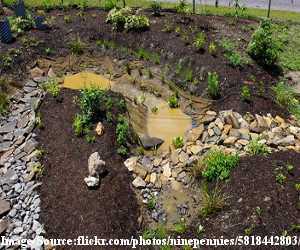
 During the downpour season, heavy shower of rain gushes from your home roofs, sidewalks and corridors. Instead of letting this fresh water to go in drain, why don’t you utilize it effectively? We all chatter about saving water but just talking without taking any action is not going to diminish water pollution. Just a bit of effort and creativity will help to prevent the rain water from getting wasted and create a wonderful and useful rain garden. This attractive landscape feature allows to capture all the gushing rainwater and utilize it in best possible way. Since the rain garden is cultivated with an array of beautiful plants, it will garnish your garden. The saved rainfall work as natural filtering and feed your plants, fruitfully.The vivid blossoms in your yard attract lovely butterflies and birds and make the outdoor cheerful and colorful. It also has ecological advantages like removing impurities from the rainwater and restores the ground water. It aids to absorb more water than the usual gardens.How to create a rain garden?Choose a perfect location:It is important choose an appropriate location to set up the rain garden. Examine the location where maximum rainwater flows. The best way to opt for location is observing yard areas before and after the downpour. Generally a depression in the ground or any place at the base of steep slope is the best place to create rain garden as the water will be gathered and sieve down in mud in due course. Try to analyze a spot where maximum water gets accumulated.Take a soil test:Once you have determined the location for creating the rain garden, start digging hole deep of 6 inches and test the soil type and water permeability. After you have made the hole, fill it with water and check how much time, it takes to drain. If the water gets depleted within 24 hours then the soil is properly absorbent.Decide the size and shape of the garden:After location and testing soil, it’s time to decide how big garden you want. The size of garden usually depends upon the amount of rainwater is showered. Before you start digging, evaluate the depth, shape and surface area of the rain garden. Generally a rain garden is of 3 to 12 inches deep and is hollowed out in shape of bean with the lengthy part facing upslope so that most of the water gets accumulated.What plants to opt for?To make your rain garden gorgeous, colorful plants play a very important role. Go for native plants instead of exotic ones, since they will have strong root and will require less maintenance. Shrubs are great choice as they have exceptional root system which helps to absorb water and avoid erosion. It is advisable to choose for plants that are 1 or 2 years old as they will have fixed root system. Grow an assortment of flowering plants that best suits the local climatic conditions, it will be exciting and dramatic.Maintenance of the rain garden:Maintenance is not at all an issue for rain garden as the pesticides, fertilizers and regular watering is required only on the first year. During the early time of spring and fall season, you need to dig over, clean and re-compost the garden. Trim down the plants if needed, clear off all the dead leaves and ensure there is no blockage due to debris.Creating a rain garden is not a difficult task, if you are ready to put in some efforts then you can construct a great rain garden which will be worthwhile as well as charming.займ на карту без отказов круглосуточновзять кредит онлайн