

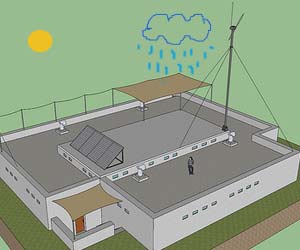
 The main objective of the house or the building is to provide shelter and to maintain the interior ambiance comfortable. With the increasing urbanization and cutting down of trees, it has become very essential to make our home climate sensitive. Climate sensitive design is one of the key techniques to save the use of energy. Climate sensitive design is the method to use the natural conditions in the best way. Following are the techniques used to make your home climate sensitive:Orientation:Windows of the house should be on north side, to allow the sun enter the house. This will allow maximum amount of sunlight to enter the house during winter. The most frequently used rooms should be on the north side of the house. These points should be considered while planning the design of the house.Roof:The roof requires insulation in winter as the heat is retarded. It will reduce the need of heating and save upto 50% of energy costs. Additional bulk ceiling or double roof is a good method to confine the heat flow. During rainy season, if the building is not conditioned it becomes very vital to the make the roof waterproof. The vents can be added on the roof to improve the circulation of the air. The expenses of cooling and heating can also be brought down by using reflective foil insulation technology. It is a shiny material installed in loft or attic areas. It is cost – effective as well as energy efficient.Thermal effect:Correct use of thermal can moderate the internal temperatures. The resistance of the thermal is based on the thickness of the building material. The interior floors and the walls should be made of bricks, concrete or any other thick material. Thermal mass plays an important role in providing thermal comfort in the houses. Thermal mass are the lightweight materials that are most suitable.Building color:The color of the building material plays a very important role in the climate sensitive design of the house. If the color is darker than it absorbs more heat as compared to lighter color material.Walls:It becomes necessary to the wall to transmit less heat to the interior and promote airflow during humid climate. Use light color to paint the exterior of the wall. Do not use any material that is water-sensitive for e.g. Wood cladding. Use low e-glass for the glazing. You can insulate the walls with a non-conducting material such as polystyrene sheets. To improve the moister resistance of the wall, plastering is the best option.If you want to increase the comfort level of your home and most importantly if you want to cut-down the cost of heating and cooling the house by mechanical or electrical means than incorporate the above methods and make your home climate sensitive.займ на карту без отказов круглосуточновзять кредит онлайн